Are Bone Conduction Headphones Good?
Excellent for one job and mediocre at the rest, and that is by design. Here is why the bass cannot exist and when open ear beats them outright.
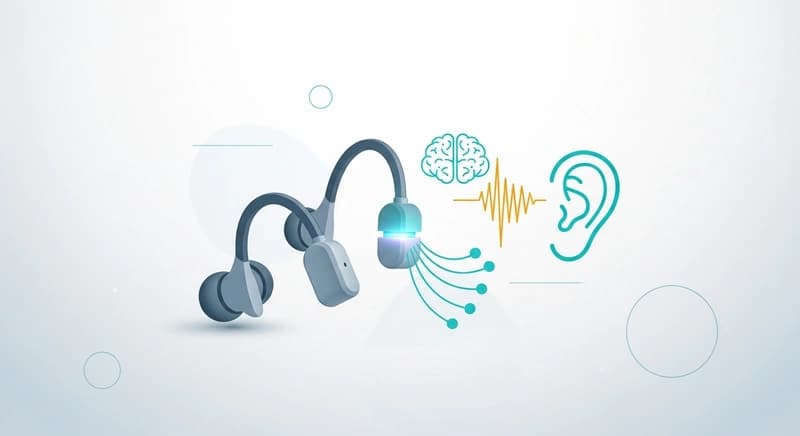
Bone conduction headphones are excellent for one specific purpose and mediocre at everything else, and that is by design rather than by compromise. If you need to hear traffic while running or cycling, nothing else does the job as completely, because your ears stay entirely uncovered. If you want sound quality, isolation or bass, they are the wrong product and no model in the category changes that.
The limitations come directly from the mechanism, which is worth understanding before buying.
How they work, and why bass is limited
Normal headphones move air, which vibrates your eardrum, which drives the tiny bones of the middle ear, which stimulate the cochlea.
Bone conduction skips the first three steps. A transducer pressed against the bone in front of your ear vibrates your skull directly, and those vibrations reach the cochlea through the bone itself.
The route is real and well established. It is how you hear your own voice from the inside, and why recordings of yourself sound wrong.
The bass limitation follows from the physics. Producing low frequencies means moving mass, and the transducer is trying to move your skull, which is heavy and stiff. Reproducing 40 Hz through bone at any useful level requires far more energy than the device can deliver, and the energy that is delivered is felt as vibration rather than heard as bass.
This is not something a better model solves. Every bone conduction headphone has thin bass, and manufacturers compensate with tuning rather than overcoming it.
What they are genuinely good for
Running and cycling in traffic, which is the reason the category exists. You hear cars, cyclists and people with no processing delay and no attenuation whatsoever.
Transparency modes on sealed earbuds do something similar by passing outside sound through microphones, and that path alters what you hear slightly. Here you simply hear.
Long wear comfort, since nothing enters or covers the ear. People who find earbuds uncomfortable after an hour usually get on well with these.
Situations where your ear canals need to stay clear, including recurring outer ear infections, wearing hearing aids, or working somewhere that requires earplugs. That last case is bone conduction’s unique advantage: it works with plugs in, since the sound bypasses the canal entirely.
Certain kinds of hearing loss. Where the outer or middle ear is the problem and the cochlea is intact, bone conduction bypasses the damaged part. This is a real clinical principle rather than marketing, though consumer headphones are not medical devices.
Swimming, on models with onboard storage, since Bluetooth barely travels through water.
What they are not good for
Commuting on a train or plane. No isolation, so you raise the volume against the noise and still lose the quiet passages.
Music where bass matters. It is not there, and no equalizer creates it.
Private listening. They leak at higher volumes, which people near you can hear.
Calls in noisy places, since the microphone is exposed to everything around you.
Any situation where you want to be absorbed rather than aware, which is the opposite of what they are for.
How they compare to open ear headphones
This is the comparison worth making, because open ear designs solve the same problem differently and are frequently the better answer.
Open ear headphones hook over your ear and fire sound across a small air gap using a conventional driver. Nothing touches bone and nothing enters the canal.
Because they use ordinary air conduction with a normal driver, they generally sound better, with more body and less of a tickling sensation.
Bone conduction keeps two advantages: it works with earplugs fitted, and it works underwater on the appropriate models.
For most runners and cyclists, an open ear design is the better choice. For a building site, a swimmer, or someone who needs their canal genuinely clear, bone conduction wins. Our piece on what open ear headphones are compares the two properly.
Fit decides everything
More than with any other headphone type, placement determines what you hear.
The transducers belong on the hard bone just in front of your ear canal opening, not on the soft tissue below and not on the ear itself. Feel for the ridge that moves when you open your jaw.
Most people position them too low the first time and conclude the sound is thin. Sliding them forward and back while playing something with bass finds a position where the low end noticeably fills in.
Hair between the transducer and skin damps the vibration and costs you bass, which is a common and easily missed cause of poor sound.
Band size matters more than with conventional headphones. Too large and the transducers lose contact, too small and it clamps. The test is a head shake: if they move at all, the band is too large.
Glasses go on after the headphones, since the arms otherwise lift the transducers off the bone. Our guide on wearing bone conduction headphones properly covers the positioning in detail.
Are they safer for hearing
Partly, and not for the reason usually claimed.
Hearing damage depends on the energy reaching the cochlea and how long it lasts. Bone conduction still delivers energy to the cochlea, so you can absolutely damage your hearing with these.
What helps is that the eardrum and middle ear are not being driven directly, and the ear canal stays ventilated, which removes the humidity and wax problems sealed earbuds cause.
What hurts is that with no isolation you turn them up in noisy places, which is the mechanism that causes harm.
The genuine safety benefit is situational rather than audiological. Hearing a car you would otherwise have missed prevents a specific kind of injury, and that is a real advantage over sealed earbuds with cancellation on.
Frequently asked questions
Are bone conduction headphones good?
They are excellent for running and cycling in traffic, where leaving your ears completely open is the whole point, and for anyone who needs their ear canals clear. They are poor for sound quality, isolation and bass, and those limitations come from the mechanism rather than from any particular model.
Why do bone conduction headphones have no bass?
Because producing low frequencies means moving mass, and the transducer is trying to move your skull, which is heavy and stiff. The energy required is far beyond what the device can deliver, and what is delivered tends to be felt as vibration rather than heard. No model overcomes this.
Are bone conduction or open ear headphones better?
Open ear designs usually sound better, since they use a conventional driver moving air rather than vibrating bone, and produce no tickling sensation. Bone conduction keeps two real advantages: it works with earplugs fitted, and it works underwater on models with onboard storage.
Are bone conduction headphones safer for your ears?
Situationally, yes, because hearing traffic prevents a specific kind of injury. Audiologically, not really, since energy still reaches the cochlea and you can damage your hearing with them. The genuine benefit is that the canal stays ventilated, avoiding the humidity and wax problems sealed earbuds cause.