Are Klipsch Speakers Good?
The horn tweeter makes them play as loud on 20 watts as rivals do on 160. Here is what that buys, what it costs, and why listeners disagree so sharply.
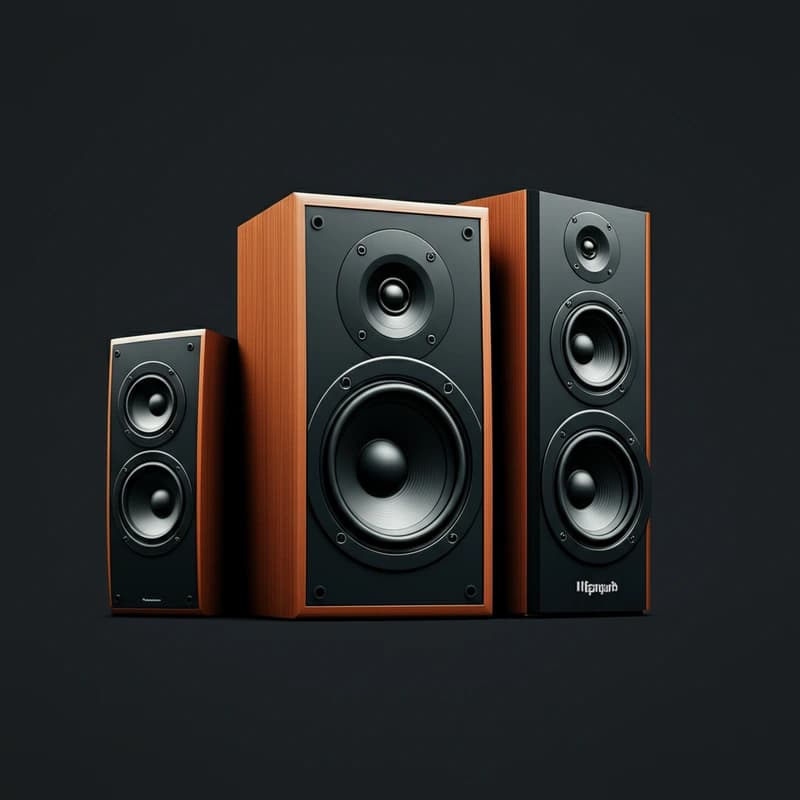
Klipsch speakers are very good at what they are designed for and polarizing for the same reason: the horn loaded tweeter that gives them unusually high sensitivity also gives them a forward, energetic sound that some listeners love and others find aggressive. There is no neutral verdict here. Whether they are good depends almost entirely on whether that presentation suits you.
The horn is the whole story, so it is worth understanding what it actually does.
What horn loading does
A conventional dome tweeter radiates into open air, which is inefficient. Most of the energy put into it does not become sound you hear.
A horn is an acoustic transformer. It couples the small, high pressure movement of the driver to the large, low pressure open air more gradually, and that coupling raises efficiency substantially.
The measurable result is sensitivity. Klipsch models commonly sit between 95 and 98 dB at one watt from one meter, against roughly 86 to 88 dB for a typical conventional bookshelf speaker.
That gap is larger than it sounds. Doubling amplifier power buys 3 dB, so a 96 dB speaker reaches the level a 87 dB one needs eight times the power to reach. A 20 watt amplifier driving Klipsch plays as loud as 160 watts driving something conventional.
The horn also controls directivity. It confines the treble to a defined angle rather than spraying it everywhere, which means less sound bouncing off your side walls and ceiling before reaching you.
What that buys you in practice
Effortless volume. These speakers do not strain, and dynamic peaks in music arrive with impact rather than compression.
Compatibility with modest amplification. Low power tube amplifiers, vintage receivers and small integrated amps all work well, which opens up equipment options that conventional speakers close off.
Better behavior in a difficult room. Because the horn controls where the treble goes, a bright or reflective room causes fewer problems than it would with a wide dispersion speaker.
Clarity at low volume, which is the underrated one. High sensitivity means the speaker is doing real work even at quiet listening levels, where inefficient speakers can sound flat.
The criticism, fairly stated
The house sound is forward through the upper midrange and lower treble. That presentation reads as detailed and exciting on good recordings and as harsh on poor ones.
Compressed streaming audio and older bright recordings are exposed rather than smoothed over. A speaker that hides nothing will not hide the flaws either.
Some listeners describe a specific character to horn treble, a slight hardness on massed strings or sibilance on vocals. Others do not hear it at all. This is a genuine difference in perception rather than one camp being wrong.
The controlled directivity that helps in a bad room also narrows the area where the speaker sounds right. Off axis, particularly vertically, the balance changes more than with a conventional design.
The ranges
| Range | Position | Notes |
|---|---|---|
| Reference | Entry to mid | The horn character at accessible prices |
| Reference Premiere | Mid to upper | Better cabinets, refined horn, the volume seller |
| Heritage | Flagship | Klipschorn, La Scala, Cornwall, Forte, Heresy |
| Synergy and Bookshelf | Budget | Where the cost cutting shows |
| The Fives, The Sevens and similar | Powered | Built in amplification, no receiver needed |
The Reference Premiere line is where most buyers should look. It carries the engineering that defines the brand without the Heritage pricing.
The Heritage models are a different proposition entirely. Designs tracing back to Paul W. Klipsch, who founded the company in Hope, Arkansas in 1946, still built there, and priced as furniture as much as electronics. They are extraordinarily efficient, physically enormous, and require a room that can accommodate them.
The budget lines are where the compromises live, and a well chosen conventional speaker at the same price frequently sounds better.
What they need from your room and system
Wall distance matters. Most Reference models are rear ported, and pushing them against a wall reinforces the port output into a boom that fights the forward treble. A foot of clearance changes them noticeably.
Toe-in is a real tool with these. Because directivity is controlled, angling them changes the treble balance at your seat significantly. Pointing them straight ahead rather than at your ears is a common fix for anyone finding them bright.
Soft furnishing helps. A room with a rug, curtains and upholstered furniture suits this presentation far better than a hard, sparse one.
Source quality matters more than with forgiving speakers. If your listening is mostly compressed streaming, that is worth weighing before buying.
Amplifier power is genuinely not the constraint, so spend the budget on quality rather than watts.
Who should buy them
People who listen to rock, live recordings, jazz and film soundtracks, where dynamics and impact are the point.
People with modest or vintage amplification, since the efficiency turns a limitation into a non-issue.
People building a home theater, where the effortless output and controlled dispersion both work in your favor.
People who have heard them and liked them, which is the only reliable test. This is a brand where a demonstration matters more than a review, because the disagreement about the sound is real rather than a matter of quality.
People wanting a neutral, gentle presentation for long background listening are better served elsewhere. Our piece on whether Polk speakers are good covers a more conventional alternative at similar prices.
Frequently asked questions
Are Klipsch speakers good?
They are well engineered and genuinely distinctive, with horn loaded tweeters giving sensitivity around 95 to 98 dB against 86 to 88 dB for typical designs. That makes them effortlessly loud on modest amplification. The forward presentation divides listeners, so a demonstration matters more with this brand than most.
Why are Klipsch speakers so efficient?
The horn acts as an acoustic transformer, coupling the driver’s small high pressure movement to open air more gradually than a bare dome can. That raises efficiency by roughly 8 to 10 dB, which is the equivalent of having eight times the amplifier power. It also controls where the treble goes.
Are Klipsch speakers harsh or bright?
They are forward through the upper midrange and lower treble, which sounds detailed on good recordings and harsh on poor ones. They expose compressed audio rather than smoothing it. Angling them straight ahead instead of at your ears, and a room with soft furnishings, both take the edge off considerably.
Which Klipsch range should I buy?
Reference Premiere for most people, since it has the engineering that defines the brand at a sensible price. Reference below it if the budget is tighter. Heritage models are a separate proposition, extremely efficient and large, priced as much as furniture. The budget lines are where a conventional competitor often wins.