Are Polk Speakers Good?
They avoid the two mistakes that ruin budget speakers. Here is what each tier changes, why cabinets beat drivers, and the free setup that matters.
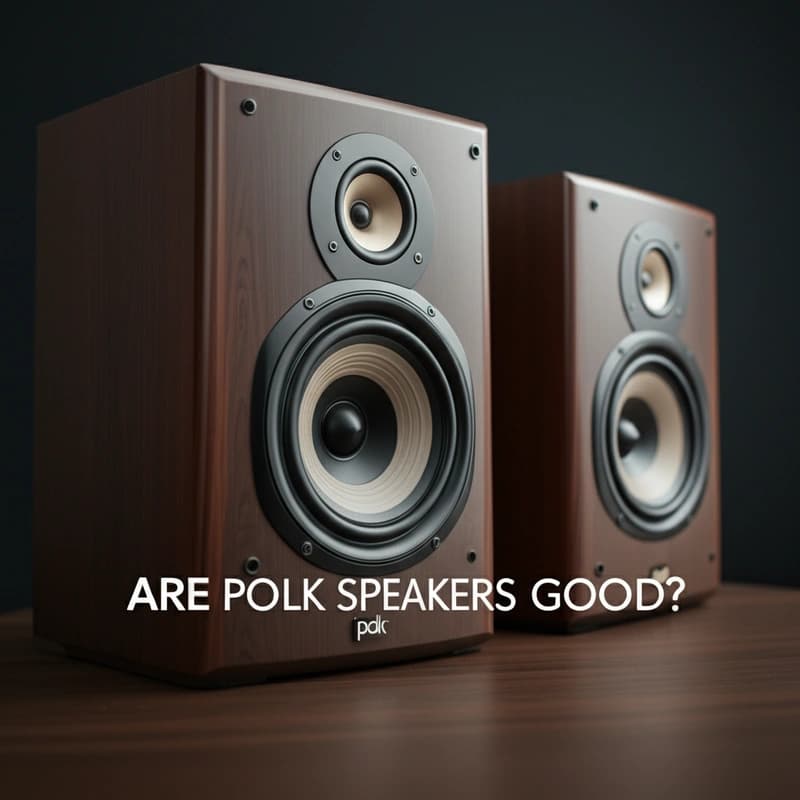
Polk is the brand most often recommended to people who want good sound without spending a lot, and that reputation is deserved. The tuning is comparatively neutral, sensitivity is generally high enough to work with modest amplification, and the value at the Monitor and Signature tiers is difficult to beat. The Reserve range is where the engineering becomes genuinely competitive with more expensive names.
What makes them easy to recommend is less about any single feature than about what they do not do.
What Polk gets right
The tuning avoids the two mistakes that ruin budget speakers. There is no exaggerated bass lift making everything sound thick, and no lifted treble making them sound detailed in a shop and fatiguing at home.
The result is a balance that stays listenable for hours, which is what most people actually want and what most budget speakers get wrong.
Sensitivity across the range is generally in the high 80s to low 90s in decibels at one watt from one meter, which is enough that a modest receiver drives them properly. That matters more than buyers realize, because a speaker your amplifier cannot drive sounds worse than a cheaper one it can.
Build quality is appropriate to the price rather than exceptional, and consistency across production is good.
The range is coherent. Bookshelf, floorstanding, center and surround models within a series share a tonal character, which is what lets you build a home theater that sounds like one system rather than five speakers.
The tiers
| Range | Position | Notes |
|---|---|---|
| Monitor XT | Entry | The value argument, genuinely good for the money |
| Signature Elite | Mid | Better cabinets and drivers, the volume seller |
| Reserve | Upper | Where the engineering competes with pricier brands |
| Legend | Flagship | Serious speakers at serious prices |
| Atrium | Outdoor | Weather sealed, a long standing strength |
Monitor XT is where the brand’s reputation comes from and where most people should start.
Signature Elite is the step worth taking if the budget allows, with noticeably better cabinet construction, which matters more than driver changes at this level.
Reserve is a genuine change rather than a marketing tier, with better drivers and cabinet work that competes properly above its price.
Why cabinet construction matters more than drivers
This is the useful thing to understand when deciding whether to move up a tier.
A speaker cabinet is trying to be acoustically inert. The driver pushes air forward and pushes back against the cabinet with equal force, and any panel flexing in response radiates sound of its own, delayed and unrelated to the music.
That radiation muddies the midrange in a way that is hard to identify and easy to hear once you know. It is why a well built speaker sounds cleaner rather than louder.
Cabinet improvements are thicker panels, internal bracing, and better damping material. They cost money and weight and do not appear in any specification you can compare.
This is why moving up a tier within one brand usually delivers more than moving sideways between brands at the same price, and why the heavier speaker of two similar ones is frequently the better one.
What to be realistic about
These are value speakers, and at the entry tiers you get value rather than refinement. A speaker at three times the price does more, and that is not a criticism of Polk.
The bass extension quoted for compact models needs reading with care. A figure like 40 Hz means little without a tolerance such as plus or minus 3 dB attached, since without it a manufacturer can include frequencies the speaker barely produces.
Ported designs, which most of these are, need space behind them. Pushing a rear ported speaker against a wall turns the port output into a boom that fights the rest of the sound.
The subwoofers are competent rather than a reason to choose the brand.
Nothing here is exciting in the way a horn loaded or high sensitivity design is. Our piece on whether Klipsch speakers are good covers a deliberately more forward alternative.
Setting them up properly
Placement will change them more than a tier upgrade would, and it costs nothing.
Pull them away from the wall behind. Six inches to two feet, and the further out the tighter the bass and the better the sense of depth.
Get the tweeters to ear height when seated. Treble is directional, and a speaker firing at your chest loses detail you paid for. This is the most common mistake with bookshelf speakers on low furniture.
Form a triangle, with the speakers roughly as far apart as they are from you, angled inward.
Keep the two speakers symmetrical relative to the side walls, since asymmetry shifts the stereo image in ways no setting corrects.
Use stands or isolation pads rather than a shelf, since cabinet vibration transmitted into furniture adds resonance you cannot remove afterward.
Add soft furnishing if the room is bare. A rug between you and the speakers removes the floor reflection, which is the single most damaging one in a small room.
Who they suit
People building a first proper system who want the money to go into sound rather than a badge.
People assembling a home theater gradually, since the ranges match tonally and can be added to over time.
People with a modest amplifier or receiver, since these are not hard to drive.
People who listen for hours, where a neutral balance matters more than initial impact.
People wanting a distinctive character or effortless volume from low power should look at high sensitivity designs instead.
Frequently asked questions
Are Polk speakers good?
Yes, and they are among the easiest recommendations at their prices. The tuning is comparatively neutral, avoiding the exaggerated bass and lifted treble that spoil most budget speakers, and sensitivity is high enough that a modest receiver drives them well. Monitor XT is the value tier and Reserve is where the engineering gets serious.
Which Polk range should I buy?
Monitor XT if the budget is tight, since that is where the brand’s reputation was built. Signature Elite is the step worth taking if you can, mainly for better cabinet construction. Reserve is a genuine engineering change rather than a marketing tier and competes above its price.
Why does cabinet quality matter in speakers?
Because a flexing panel radiates its own sound, delayed and unrelated to the music, which muddies the midrange. Thicker panels, internal bracing and damping make a speaker sound cleaner rather than louder. It does not appear in any comparable specification, which is why the heavier of two similar speakers is often the better one.
How far from the wall should Polk speakers be?
At least six inches, and one to two feet is better on the rear ported models most of the range uses. Close to a wall the port output reinforces into a boom that masks detail. Getting the tweeters to ear height when seated matters just as much, and both cost nothing.