Are Rockville Speakers Good?
Better than the price suggests and worse than the box claims. Here is how to read those power figures, and the one spec worth comparing instead.
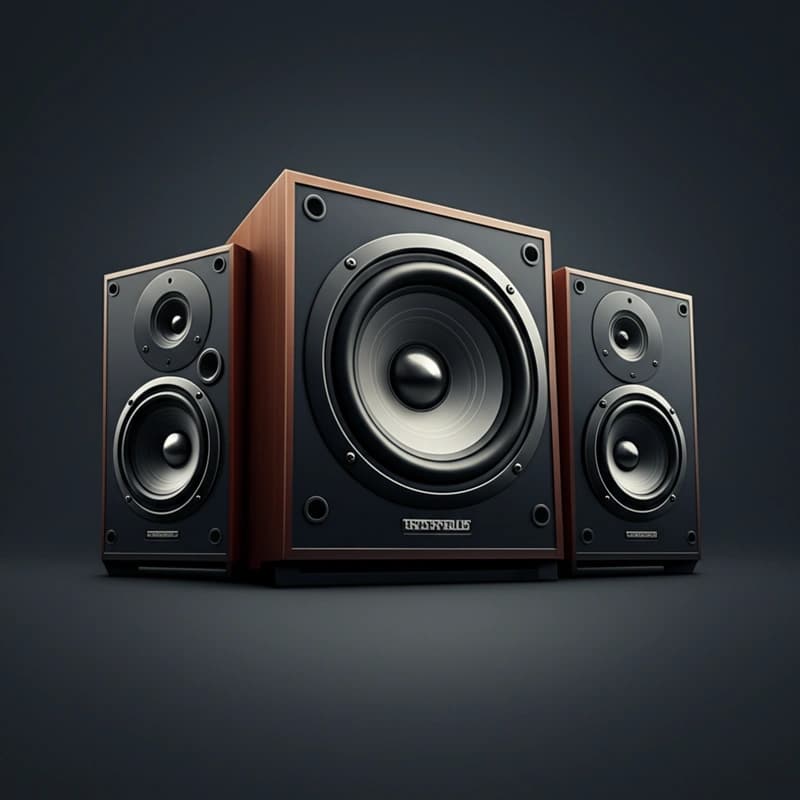
Rockville speakers are considerably better than their price suggests and noticeably worse than their specifications claim, and both of those statements matter. The brand sells direct at prices that undercut established names substantially, and the power ratings printed on the boxes are not measured to any standard you can compare against. Buy them understanding that, and they represent real value.
The specification question is where most of the disappointment comes from, so it is worth dealing with first.
Read the power ratings with care
Rockville quotes large peak wattage figures across its range, and those numbers are not comparable to figures from brands that publish measured ratings.
There is an industry standard for this. CTA-2006, formerly CEA-2006, specifies output measured at a defined voltage, into a stated impedance, with distortion held at or below 1 percent. When a brand quotes to that standard, the number is verifiable and comparable.
Where no standard is cited, a peak or maximum figure can be arrived at almost any way the manufacturer chooses. It typically describes a brief transient rather than anything the product sustains.
The practical guidance is straightforward. Use the RMS figure if one is given, halve your expectations of any peak figure, and never compare a peak rating from one brand against an RMS rating from another. Our piece on brands that publish measured power ratings explains what the standard actually specifies.
This is not unique to Rockville. It is normal practice across the direct-to-consumer end of the market, and Rockville is neither the worst offender nor an exception.
What you actually get for the money
Judged against the price rather than the specification, the picture is much better.
Build quality is generally solid for the cost. Cast or stamped baskets appropriate to the tier, adequate surrounds, and finishing that looks more expensive than it is.
The value comes from the sales model. Selling direct removes the distributor and dealer margins that sit inside the price of an established brand, which is a genuine structural advantage rather than a trick.
Consistency across production is the usual weak point at this end of the market, and reported experience varies more than with the established names. Buying from an authorized seller with a working return path matters more here than it does elsewhere.
The range is very wide, covering car audio, marine, pro audio, home theater, subwoofers and amplifiers, and quality is not uniform across all of it.
Where the range is strongest
Pro audio and PA speakers, where the design goals are output and durability rather than refinement, and where the price gap against established brands is largest.
Marine speakers, which are competently sealed and cost a fraction of the specialist marine brands.
Subwoofers, which are straightforward products where the engineering is well understood and the value shows clearly.
Amplifiers for subwoofer duty, where the demands are less exacting than full range amplification.
Anything where the alternative is nothing. A Rockville system in a car that currently has factory paper cones is a large improvement, whatever the specification sheet says.
Where to be cautious
Critical listening. The tuning across the range favors impact over accuracy, and if you want a neutral balance this is the wrong starting point.
Applications where failure is expensive or inconvenient. Installed home theater and permanent commercial installations are places where the consistency question matters.
Buying on specification comparison. If you are choosing between Rockville and an established brand by comparing the numbers on the boxes, you are comparing a marketing figure against a measurement and you will make the wrong choice.
Long term support. Parts availability and warranty service are not comparable to the major brands, and this is part of what the price difference pays for.
Judge speakers on the number that matters
Sensitivity tells you far more than wattage does, and almost nobody reads it.
It is quoted in decibels at one watt from one meter, and it describes how much sound a speaker makes from a given input. A 91 dB speaker produces the same level from one watt that an 88 dB speaker needs two watts to reach.
Since doubling amplifier power buys only 3 dB, a 3 dB sensitivity advantage is worth exactly as much as doubling the size of your amplifier.
Frequency response is the other useful figure, and only if it includes a tolerance. A range quoted as 40 Hz to 20 kHz means nothing without a figure like plus or minus 3 dB attached, because without it the manufacturer can include frequencies the speaker barely reproduces.
Both of these are more informative than any wattage number, and both are comparable across brands in a way peak power is not.
Getting the best from them
Match the amplifier to the RMS rating rather than the peak. Over-powering is a faster route to damage than under-powering.
Set the gain by ear at a level you actually use, rather than turning it up until something audibly changes, which is already too far.
Deaden car doors before upgrading speakers. Panel resonance limits what any speaker can do, and deadening material costs less than a set of drivers while improving them more.
Seal the speaker to the mounting surface. Without a seal the front and rear output meet and cancel, which removes the bass before it reaches you.
Use adequate wire gauge and a solid ground, since undersized power wiring is the most common reason an amplifier fails to deliver what it can.
Cross over sensibly and do not ask small drivers to reproduce low frequencies, which is the usual cause of distortion blamed on the speaker.
Frequently asked questions
Are Rockville speakers good?
For the price, yes, and the value is genuine because selling direct removes distributor and dealer margins. The build is solid for the cost. The published power figures are peak ratings not measured to any comparable standard, so they overstate what the products deliver by a wide margin.
Are Rockville power ratings accurate?
They are peak figures rather than measured ratings, so treat them as marketing. Compare using the RMS figure where one is given, and never compare a peak rating from one brand with an RMS rating from another. This practice is common across the direct-to-consumer market rather than specific to Rockville.
How do Rockville speakers compare to established brands?
Behind on consistency, support and parts availability, and substantially cheaper. The gap narrows in categories where the engineering is well understood, such as subwoofers and PA speakers, and widens where refinement matters. Buying from an authorized seller with a return path matters more with this brand than most.
What specification should I actually compare?
Sensitivity, quoted in decibels at one watt from one meter, since it tells you how loud a speaker plays from a given input and a 3 dB advantage equals doubling your amplifier power. Also frequency response, but only where a tolerance such as plus or minus 3 dB is stated alongside it.