What Is Inside a Three Way Speaker?
Three drivers, and the crossover is the hard part rather than the count. Here is why a dedicated midrange matters and what to check before buying.
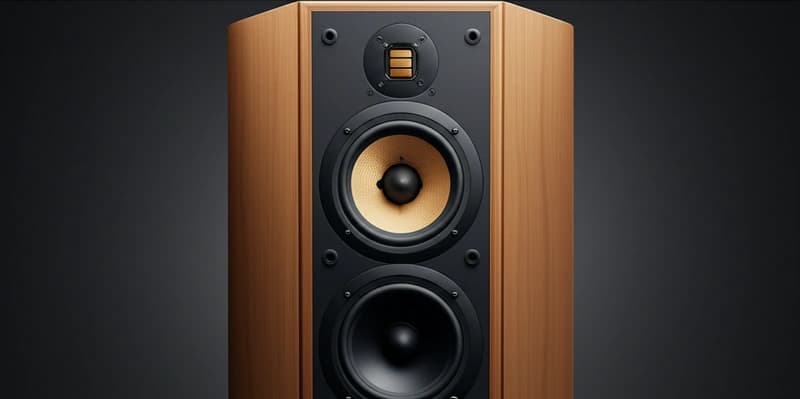
A three way speaker splits the audible range across three drivers instead of two, and the reason is that no single cone does the whole job well. A woofer handles bass, a dedicated midrange handles the region where voices and most instruments live, and a tweeter handles treble. The engineering that matters is not the driver count but the crossover that divides the signal between them.
Understanding what a three way design buys you explains why high end manufacturers keep choosing it.
Why a dedicated midrange matters
In a two way speaker, one driver covers bass and midrange together. That driver is asked to do two contradictory things.
Producing bass requires a large cone with substantial excursion, moving a lot of air slowly. Producing midrange accurately requires a light, stiff cone that starts and stops quickly and stays free of resonance.
A cone big enough for bass is heavy, and a heavy cone smears midrange detail. It also begins to break up rather than moving as a single piece at higher frequencies, which introduces coloration exactly where your ear is most sensitive.
A three way design gives that midrange region to a driver optimized for it alone, typically 3 to 6 inches, light enough to be fast and large enough to have authority.
Since human hearing is most sensitive between roughly 1 and 4 kHz, and voices sit right there, this is the region where accuracy is most audible. It is the strongest argument for the extra driver.
The crossover is the hard part
Dividing the signal into three bands is significantly harder than dividing it into two, and this is where designs succeed or fail.
Each crossover point creates a region where two drivers are both producing sound. In that overlap they must sum correctly, which means matching in both level and phase. Get it wrong and you get a dip or a peak at the crossover frequency.
Three way designs have two crossover points, so there are two chances for this to go wrong.
Physical offset complicates it further. The drivers sit at different heights on the baffle, so sound from each arrives at your ears at slightly different times. Good designs compensate with a sloped or stepped baffle, or with crossover network delay.
The crossover components themselves matter. Higher quality capacitors and inductors with tighter tolerances cost real money, and a three way network needs more of them.
This is why a well executed two way speaker frequently beats a poorly executed three way at the same price. The driver count is not the achievement.
What to look for in any three way design
Crossover frequencies, if published. A midrange handed the region from roughly 300 to 3000 Hz is doing the job the design exists for.
Whether the midrange has its own sealed sub-enclosure, which isolates it from the pressure the woofer generates inside the cabinet. Without it, the woofer’s air movement modulates the midrange cone, which audibly muddies things.
Cabinet construction, since a flexing panel radiates its own delayed sound. Thicker panels, internal bracing and damping cost weight and money and do not appear in any comparable specification. The heavier of two similar speakers is frequently the better one.
Driver materials, less for the marketing claims than for what they indicate about the design budget.
Sensitivity, quoted in decibels at one watt from one meter, which tells you how much amplifier you need. Three way designs are frequently a little less sensitive, since the crossover network absorbs energy.
Impedance, including the minimum rather than just the nominal figure, since complex crossovers can present a difficult load.
Three way against two way
| Two way | Three way | |
|---|---|---|
| Midrange accuracy | Compromised by cone size | Better, dedicated driver |
| Crossover complexity | One point | Two points, harder to get right |
| Cost at equal quality | Lower | Higher |
| Cabinet size | Smaller | Usually larger |
| Amplifier demands | Generally easier | Often harder |
| Value at low prices | Better | Usually worse |
Below a certain price, a two way design is the sensible engineering choice, because the money available goes further into two good drivers and one crossover point than into three compromised drivers and two.
Above that price, the three way advantage becomes real, and it is why serious floorstanding designs are usually three way.
What matters more than the design type
Room placement, by a wide margin. A speaker pushed against a wall gains bass and loses clarity, and pulling it out changes it more than a driver upgrade would.
Tweeter height relative to your ears, since treble is directional and a speaker firing at your chest loses detail you paid for.
Symmetry between the two speakers relative to the side walls, since asymmetry shifts the stereo image in ways no setting corrects.
Room treatment, particularly the first reflection points on the side walls and the floor between you and the speakers. A rug is the cheapest meaningful improvement available.
Amplifier quality rather than power, since the sensitivity of most designs means you need less power than you think. Our piece on what to look for in speakers at any price covers the specifications worth comparing.
Frequently asked questions
What is a three way speaker?
A speaker that divides the audible range across three drivers rather than two: a woofer for bass, a dedicated midrange driver, and a tweeter for treble. The point is that a cone large enough for bass is too heavy to reproduce midrange cleanly, so the midrange gets a driver optimized for it alone.
Are three way speakers better than two way?
At higher prices, generally yes, because a dedicated midrange driver covers the region your ear is most sensitive to without the compromises a bass cone brings. At lower prices, no, since the money goes further into two good drivers and one crossover point than three compromised drivers and two.
Why does the crossover matter so much?
Because each crossover point creates a region where two drivers overlap, and they must sum correctly in both level and phase. A three way design has two such points and therefore two chances to go wrong. A well executed two way frequently beats a poorly executed three way at the same price.
What should I look for when buying three way speakers?
Whether the midrange has its own sealed sub-enclosure isolating it from the woofer’s pressure, the published crossover frequencies, and cabinet construction, since a flexing panel radiates its own delayed sound. Check the minimum impedance as well as the nominal figure, because complex crossovers can be a difficult load.